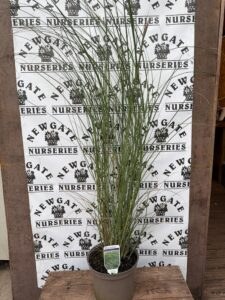
Miscanthus Gracillimus C3
£11.99
Elegant ornamental grass with feathery silver plumes from autumn through winter. Reaches 1.2m, perfect for structure and movement in borders year-round.
54 in stock
Description
Miscanthus Gracillimus is a refined ornamental grass that brings elegant movement and architectural interest to any garden scheme throughout the year. This deciduous perennial reaches approximately 1.2 metres in height, making it an ideal choice for adding structure without overwhelming adjacent plantings. From late summer through winter, it produces graceful, feathery silver plumes that catch the light beautifully, creating a shimmering effect that’s particularly striking when backlit by autumn and winter sun. The fine, arching foliage in mid-green provides textural contrast in borders and looks especially effective when planted in groups.
This Miscanthus variety is relatively hardy and undemanding once established, making it a low-maintenance addition to contemporary and naturalistic garden schemes. It thrives in well-drained soil and performs best in full sun to partial shade, though sunnier positions encourage the most vibrant plume production. Water regularly during the first growing season to establish a strong root system, then it’s largely self-sufficient, even tolerating dry spells once mature. In autumn and winter, the plumes persist on the stems and maintain their structural appeal long after other plants have died back.
Care is straightforward and requires minimal intervention. In late winter or early spring, cut back the entire plant to around 5-10cm from the ground using shears or a hedge trimmer to remove dead growth and make way for fresh spring foliage. This task is best completed before new growth emerges in March or April. Avoid cutting back in autumn, as the dried stems provide winter interest and shelter for wildlife. The plant is fully hardy and requires no additional protection in UK winters.
Miscanthus Gracillimus is perfect for gardeners seeking year-round visual interest without demanding maintenance schedules. Use it to soften hard landscaping, create movement in borders, screen unattractive views, or simply enjoy its sculptural beauty. It’s equally at home in contemporary minimalist schemes and more informal, wildlife-friendly gardens. Its ability to provide interest when many perennials have faded makes it an invaluable asset from autumn onwards.
Additional information
| Season | All Year |
|---|