
🌿 Not sure how many? Use our hedge calculator
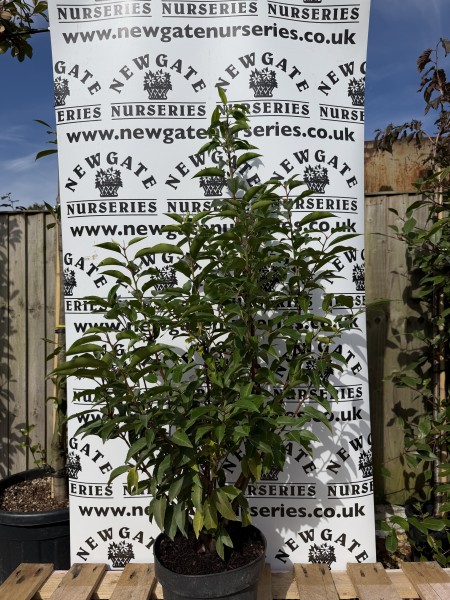
60-80cm (C3)
Plant 3 per metre
£8.99
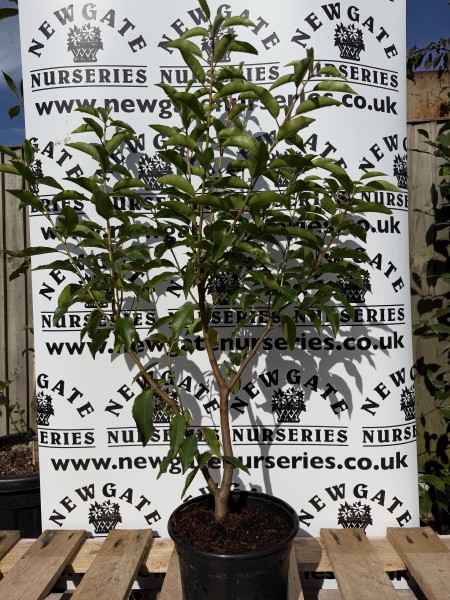
80-100cm (C5)
Plant 3 per metre
£14.99
Portuguese laurel gives you everything people plant a laurel hedge for — dense evergreen screening, glossy foliage, easy growing — with a more refined finish. The finer, darker leaf clips into sharper lines, the red stems give the hedge a depth of colour no plain green hedge has, and established hedges carry slender spikes of white flowers in early summer that bees work hard.
It’s also the laurel for tougher gardens: hardier in cold winters than cherry laurel, and noticeably happier on thin, chalky or exposed sites where its bigger cousin can look yellow and sulky.
WHICH SIZE SHOULD I CHOOSE?
Smaller plants are the economical route for a long run — they establish quickly and grow 30–45cm a year once settled. Larger sizes give a worthwhile screen from the first season. Plant 3 per metre for sizes up to about 125cm, or 2 per metre for larger plants, and the hedge knits into a solid line within two to three seasons.
All heights are measured from the top of the pot to the top of the plant.
GROWING CONDITIONS
Sun or partial shade, in any reasonable soil including chalk — the one thing to avoid is waterlogging. One trim a year, in late spring or late summer, keeps a formal line; like cherry laurel it regrows well even from a hard cut into old wood.
PLANTING & AFTERCARE
Plant into a generous hole or trench with the base broken up and a handful of bone meal per plant, rootball level with the soil surface, firmed and watered in well. Water deeply once or twice a week through the first spring and summer, feed each spring, and trim slightly narrower at the top than the base so the hedge stays leafy to the ground. We stock the bone meal, compost and fertiliser to do the job properly — add them to your delivery.
GROWN AT NEWGATE
Grown on and hardened off outdoors at our nursery in Whitestake, Lancashire. Order online for UK-wide delivery quoted at checkout, or click and collect seven days a week — we grow both laurels side by side, so come and compare them in person.
The tailored laurel: smaller, darker leaves on wine-red stems, clipping to a crisper line than cherry laurel — and hardier with it, taking cold, wind and thin or chalky soils in its stride. Steady growth of 30–45cm a year. Choose your size below; plant 3 per metre. Grown here at the nursery, ready to plant any time of year. Not sure how many you need? Use our hedge calculator or call 01772 612336.| Weight | 2 kg |
|---|---|
| Dimensions | 20 × 20 × 60 cm |
| Colour | 60-80cm (C3), 80-100cm (C5) |