Photinia

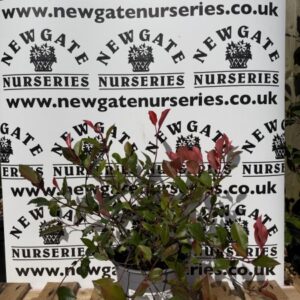
Photinia ‘Red Robin’ is the hedge that changes colour on purpose. Every flush of new growth emerges a brilliant glossy red — fire-bright in spring, again after each trim — before maturing to deep evergreen green. No other mainstream hedging plant gives you that show, which is why Red Robin has become the choice for anyone who wants their boundary to be a feature rather than a backdrop.

Behind the colour it’s a thoroughly practical hedge: dense, evergreen, growing around 30cm a year into a solid screen, happy in sun or light shade in any reasonably drained soil. And here’s the trick most people don’t know — the red flushes come from trimming, so two or three light clips a year gives you a hedge that reignites through the season instead of flaring once in spring.

Every plant below was grown on at our nursery in Whitestake, hardened off outdoors in North West weather. Pot grown stock plants year-round — use the calculator below to work out how many you need for your run.

Filter by price
Filter by

Showing the single result
PLANTING DISTANCE


Plant Photinia at 3 per metre for a dense hedge that knits together within two to three seasons, or 2 per metre with larger plants if you can wait a little longer. Use the calculator below and we'll work out the exact number and cost for your run.


WHY BUY PHOTINIA FROM NEWGATE?


Red Robin grown soft and forced for a quick sale drops its leaves the first hard spring — ours is grown on and hardened outdoors here in Lancashire, so it arrives ready for real weather. If you're deciding between Photinia and laurel, tell us about your garden and we'll give you the honest answer. Send a photo of the run and we'll spec the whole job free. Order online for UK-wide delivery quoted at checkout, or click and collect seven days a week. Call 01772 612336.

Frequently asked questions

How fast does Photinia Red Robin grow?

Around 30cm a year once established — enough to form a solid 1.5–2m evergreen screen within four seasons or so. It's a touch slower than laurel, and the trade-off is the colour: every new flush of growth comes through brilliant red.

How far apart should I plant Photinia hedging?

3 plants per metre for a dense hedge, or 2 per metre for larger plants if you're happy to wait an extra season. Our hedge calculator works out the exact number for your run.

How do I get the best red colour on Red Robin?

Trim it. The red is new growth, so each light clip triggers a fresh scarlet flush — two or three trims between spring and late summer keeps the hedge reigniting all season. A hedge left uncut flushes red once in spring and stays green the rest of the year. Feeding in spring strengthens both the growth and the colour.

Is Photinia evergreen?

Yes — Red Robin holds its glossy foliage year-round. Some leaf drop after a harsh winter or in a cold, exposed spot is normal, and it flushes back in spring.

Why are there dark spots on my Photinia leaves, or leaves dropping?

Dark blotches followed by leaf drop are usually photinia leaf spot, a fungal issue that shows up mainly on stressed or poorly-drained plants. Rake up and bin fallen leaves, trim for airflow, feed in spring, and avoid overhead watering — vigorous plants grow through it. If you're local, bring a leaf in and we'll confirm it at the counter.

Photinia or cherry laurel — which should I choose?

Laurel if pure speed and screening are the goal — it's faster and slightly tougher in deep shade and cold pockets. Photinia if you want the hedge to be a feature: similar evergreen density with a red display no laurel can offer. Both clip well and both are happiest with decent drainage; in a very cold, exposed inland garden, laurel is the safer bet.