
Showing all 3 results
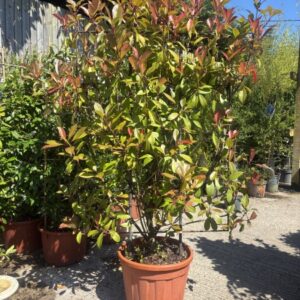
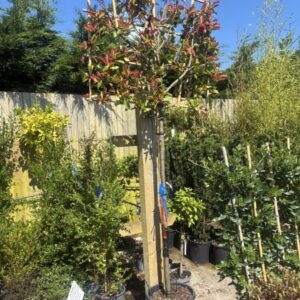
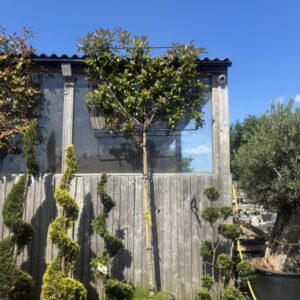
HOW MANY DO I NEED?
Pleached trees are spaced so their frames meet edge to edge — one tree per frame width, typically every 1.2 to 1.8 metres depending on the variety and frame size shown on each product. Measure your run, divide by the frame width, and round up; or send us the measurement and we'll plan the row for you, free.
PLANTING AND SUPPORT
Each tree needs firm staking for its first few years — a post-and-rail or double-stake per tree keeps the panel flat and true while the roots anchor. Plant as you would any tree: a generous hole, broken-up base, bone meal, and the rootball level with the soil surface, then water deeply through the first two summers. Trim the panels once or twice a year to keep the crisp line — it's five minutes a tree with a hedge trimmer once you're up a ladder.
WHY BUY PLEACHED TREES FROM NEWGATE?
Pleached trees are an investment, and buying them unseen is a leap — so don't. Come and walk the rows at the nursery seven days a week and pick your exact trees, or ask us for photos of the actual stock before you order. We'll advise on variety, spacing and staking for your specific boundary, and we can deliver UK-wide with shipping quoted at checkout. Call 01772 612336.
Trees trained on a flat frame above a clear stem — usually around 1.8m of bare trunk with a rectangular panel of branches and foliage on top. Planted in a row they form a raised screen, often called a "hedge on stilts", giving privacy above fence height while using very little ground space.
One tree per frame width, so the panels meet edge to edge — typically every 1.2 to 1.8 metres depending on the variety. Each product page shows the frame size; measure your run, divide by the frame width and round up, or send us the measurement and we'll plan it for you.
Both options exist. Evergreen varieties like Photinia Red Robin, evergreen oak and Portuguese laurel screen year-round. Hornbeam is the classic deciduous choice — it holds a dense twiggy structure and much of its coppery autumn leaf through winter, so it screens surprisingly well even out of season.
That's exactly their job — the panel sits at first-floor window height, screening views into your garden that a 2m fence can't. If privacy from a specific window is the goal, tell us the sightline and we'll recommend the stem height and panel size to block it.
Less than you'd think: firm staking for the first few years, deep watering through the first two summers, and a trim of the panels once or twice a year to keep the crisp formal line. The clear stems need an occasional rub-out of new shoots, which takes moments.
Yes — it's the classic use. Set them far enough off the fence for the rootball and future trunk (60cm or so is comfortable) and check the panels can overhang your own side rather than the neighbour's. As with any tall screening, keeping things trimmed and talking to your neighbour first avoids disputes — an evergreen row allowed to grow unchecked can fall under high-hedge rules, but a maintained pleached screen at sensible height rarely troubles anyone.