
Showing the single result
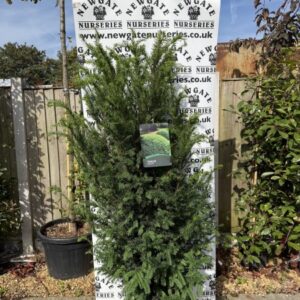
PLANTING DISTANCE
Plant yew at 3 per metre for a hedge that closes into a solid line within a few seasons, or 2 per metre with larger plants. The one thing yew will not forgive is waterlogged ground — on heavy soil, plant slightly proud on a ridge of improved soil and it will thrive. Use the calculator below and we'll work out the exact number and cost for your run.
WHY BUY YEW FROM NEWGATE?
A yew hedge is a once-in-a-lifetime planting, so it's worth getting right. We'll help you choose the size that fits your patience and budget, plan the spacing, and set you up with the drainage and feeding that yew rewards. Come and pick your plants off the beds seven days a week, or order online for UK-wide delivery quoted at checkout. Call 01772 612336.
Faster than its reputation: 20–30cm a year once established. It's slower than laurel, but that measured pace is exactly why yew holds razor-sharp clipped lines with a single trim a year — and from decent-sized plants you'll have a respectable formal hedge within four or five seasons.
3 plants per metre for a dense hedge, or 2 per metre for larger plants. Our hedge calculator works out the exact number for your run.
Superbly — yew is the most shade-tolerant hedge you can plant, staying dense and deep green under trees and along north-facing walls where laurel thins and most conifers give up entirely.
Yes — and this is yew's superpower. Unlike Leylandii and most conifers, yew regenerates from old bare wood, so a neglected hedge can be reduced drastically (best done in stages over two or three years) and will regrow dense and green. It's why 300-year-old yew hedges still look immaculate.
Yes — almost all parts of yew are toxic to people, dogs, and especially grazing animals like horses and cattle, so never plant it where livestock can reach it, and keep clippings away from paddocks. Around a normal family garden it's been the classic hedge for centuries — the plants are bitter and cases of accidental poisoning are rare — but if your dog is a determined chewer of plants, choose hornbeam or beech instead, and speak to your vet if any plant has been eaten.
Nine times out of ten: wet feet. Yew hates waterlogged roots more than anything — browning or bronzing on heavy, soggy ground is the classic sign, and improving drainage is the fix. Some bronzing in cold winter wind is normal and greens up in spring. If you're local, bring a sprig in and we'll take a look.